Hot Tub Health Benefits: What 20 Minutes in the Water Actually Does for Your Body
Most people buy a hot tub because they want to unwind. What they discover a few months later surprises them: they are sleeping better, their back hurts less, and the low-grade anxiety that follows them home from work has somewhere to go.
That is not coincidence. It is not placebo either. Warm water, jet pressure, buoyancy, and heat working through muscle tissue together produce a set of physiological responses researchers have been documenting for decades. Most of what gets written about hot tub health benefits reads like a brochure, vague claims, soft language, no real depth.
This article is different. Here is what 20 minutes in a Jacuzzi hot tub actually does to your body, system by system, so you understand not just that it works, but why.
What Happens to Your Body the Moment You Step In
The effects start before you settle into your seat. The second your body contacts water heated between 100 and 104 degrees Fahrenheit, blood vessels near the skin’s surface dilate, blood flow increases throughout the peripheral circulatory system, and your heart rate rises moderately, comparable to a light aerobic workout. Your muscles, responding to heat penetrating the tissue, begin releasing tension they have been holding all day.
Studies published in the Journal of Physiology show that hot water immersion produces cardiovascular changes similar to moderate exercise, with measurable increases in cardiac output and reductions in peripheral vascular resistance. For people who cannot exercise due to injury, chronic conditions, or demanding schedules, regular hot tub use provides a cardiovascular stimulus that would otherwise be absent from their day.
Buoyancy compounds the effect. In water up to your neck, your body loses roughly 90 percent of its apparent weight. Joints decompress. The spine lengthens slightly. Muscles that exist primarily to counteract gravity get a genuine rest for the first time all day. Water also exerts uniform hydrostatic pressure against every surface it contacts, gently compressing peripheral tissue and encouraging fluid that has pooled in the lower legs and feet throughout the day to return to central circulation. This is why most people step out of a hot tub feeling physically lighter than when they got in.

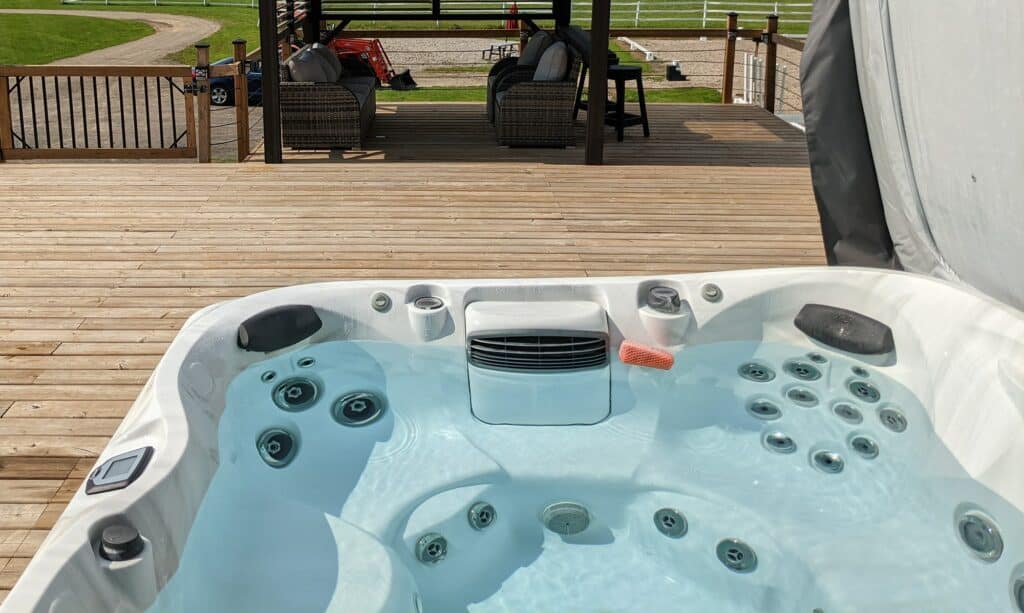
The Jacuzzi J-225, seats 7, 26 jets, open seating. A popular entry point into the J-200 Collection for families wanting daily hydrotherapy without a large footprint.
Sleep: The Benefit Most Owners Never Expected
If there is one hot tub benefit that consistently surprises new owners, it is the impact on sleep. Chronic poor sleep affects a large portion of the adult population, and the usual solutions, melatonin, sleep hygiene advice, white noise machines, often deliver only marginal results. A 20-minute hot tub soak 60 to 90 minutes before bed has solid research behind it.
The mechanism involves core temperature regulation. Sleep onset is triggered partly by a drop in core body temperature, which signals the brain to transition into rest. In modern homes kept consistently warm, this natural drop rarely occurs on its own. A hot tub accelerates the process. When you soak in hot water and then exit, your body dissipates heat rapidly, producing exactly the core temperature drop that initiates deep sleep.
A review published in Sleep Medicine Reviews confirmed that passive body heating, including hot water soaking, significantly improved sleep onset, sleep quality, and slow-wave deep sleep when soaking occurred 60 to 90 minutes before bed. The effect held even in participants with chronic sleep difficulty.
Used consistently at the same time each evening, your body begins associating the experience with sleep preparation, reinforcing the response over weeks. The same session that drops cortisol also prepares the nervous system for rest, which is why people who start soaking for stress relief frequently report improved sleep before they notice anything else.
Muscle Recovery and Post-Activity Soreness
Athletes, manual workers, and anyone who taxes their body physically have soaked in hot water for recovery purposes for centuries. Modern sports science has added clarity to exactly why it works.
Delayed onset muscle soreness, the stiffness that arrives 24 to 48 hours after intense activity, results from micro-tears in muscle fiber and the resulting inflammatory response. Warm water immersion accelerates recovery by increasing blood flow to affected tissue, delivering oxygen and nutrients needed for repair while flushing out metabolic waste. The jet massage component adds another layer: directional pressure from hydrotherapy jets produces mechanical stimulation of muscle tissue that functions similarly to sports massage. It reduces tension in tight muscles, increases local circulation, and signals the nervous system to release the guarding that causes so much residual stiffness after physical activity.
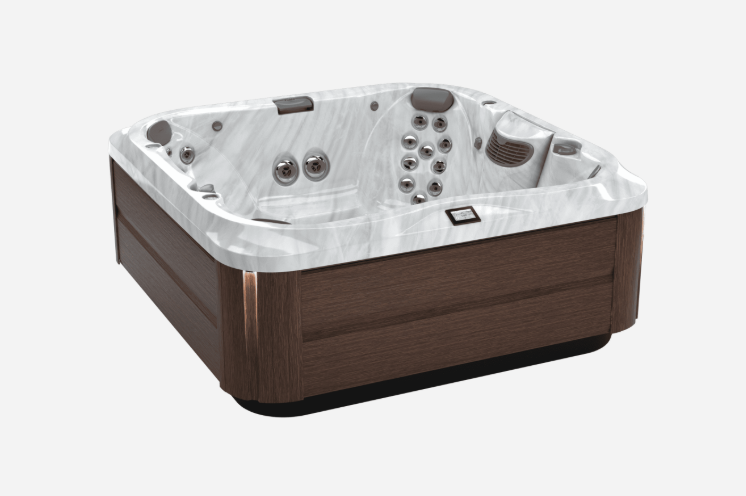
The Jacuzzi J-385 from the J-300 Collection, seats 7 adults with 51 jets in open seating. The J-300 series is purpose-built for therapeutic performance, with jet placement designed to target the lumbar region, shoulders, and calves.
For chronic lower back pain specifically, hydrotherapy addresses the problem through several mechanisms at once. Heat relaxes paraspinal muscles contracted around a painful area. Buoyancy removes compressive load from lumbar discs and facet joints. Jet pressure, positioned correctly at the lumbar region, provides targeted soft tissue work to the structures most commonly involved in back pain.
Research published in the Journal of Rheumatology found that regular hydrotherapy produced meaningful reductions in pain and functional disability in participants with chronic lower back conditions, with improvements persisting beyond the treatment period. As a daily pain management tool, it compares favorably to many pharmaceutical options with a side effect profile of essentially zero.
Arthritis and Joint Pain
The Arthritis Foundation has recommended hydrotherapy as a beneficial complementary treatment for both osteoarthritis and rheumatoid arthritis for years. The reasoning is grounded in physiology. Heat increases synovial fluid viscosity for better joint lubrication. Vasodilation increases circulation to inflamed tissue around joints. Buoyancy eliminates the gravitational compressive forces that aggravate joint surfaces during everyday movement.
For rheumatoid arthritis sufferers, who often experience their worst stiffness in the morning, a short soak before the day begins can substantially reduce the duration and intensity of morning stiffness. Clinical trials have found that consistent hydrotherapy reduces tender joint counts and improves grip strength in RA patients over four to six weeks.
Hip and knee osteoarthritis respond particularly well to warm water immersion because the weight-bearing relief is immediate and measurable. Many orthopedic surgeons now recommend hot tub use as part of both pre-surgical preparation and post-surgical recovery for joint replacement patients. The key is consistency: a single soak produces temporary relief, but a daily habit produces lasting changes in how the body manages inflammation and pain signaling.
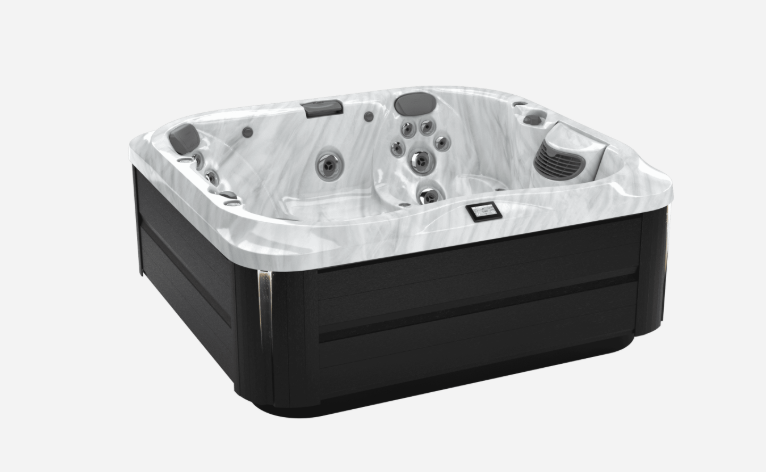
The Jacuzzi J-355 from the J-300 Collection, seats 6 adults with 44 jets and lounge seating. The full-length lounge seat is particularly valued by people managing hip, knee, or lower back conditions.
Stress, Anxiety, and Mental Health
Regular hot tub use activates the parasympathetic nervous system, the branch responsible for the body’s rest-and-repair state, while suppressing the chronic sympathetic stress response most adults carry. Cortisol, the primary stress hormone, measurably decreases with consistent hydrotherapy. Research from the International Journal of Stress Management demonstrated that regular soaking over several weeks produces lower baseline cortisol levels, reduced anxiety, better emotional regulation, and a more stable mood throughout the day. The effect is not temporary; it accumulates with consistent use.
A study published in Complementary Therapies in Clinical Practice found that twice-weekly hydrotherapy significantly reduced depression scores in participants with mild to moderate depressive symptoms over eight weeks. The researchers attributed this to a combination of thermal stimulation, the routine and ritual of regular soaking, and the underlying physiological relaxation response working together.
There is also a social dimension that is easy to overlook. Hot tubs create a specific kind of environment that is uniquely conducive to real conversation. No phones in the water. No screens to look at. The physical relaxation and forced stillness remove the usual barriers to honest, unhurried conversation. Families who own hot tubs consistently report that the spa becomes one of the few places where their best conversations happen, and the effect on relationship quality is a legitimate health outcome in its own right.
Finding the Right Jacuzzi Model for Your Health Goals
Not all hot tubs deliver the same therapeutic experience. At Swim World Chelan, the Jacuzzi lineup spans four collections, each designed with a different user in mind.
The J-200 Collection is the accessible entry point. Models like the J-235 (6 adults, 34 jets, lounge seating) and the J-285 (7 adults, 42 jets, open seating) deliver solid hydrotherapy performance at a price point that makes daily use practical for most families.

The Jacuzzi J-285, 7 adults, 42 jets, open seating. One of the most versatile models in the J-200 Collection for families wanting daily use with room for guests.
The J-300 Collection is where most therapeutic buyers land. The J-345 (7 adults, 41 jets) and J-375 (6 adults, 52 jets, lounge seating) feature enhanced insulation, more powerful jet configurations, and upgraded water care systems.
The J4 and J5 Collections are Jacuzzi’s flagship therapeutic spas. The J508 seats 8 adults with 60 jets, and the J509 seats 9 adults with 80 jets in open seating. If hydrotherapy is a genuine health priority, these models deliver results the entry-level range cannot match.
The Jacuzzi J-508 from the J5 Collection, seats 8 adults with 60 jets. The J5 series represents Jacuzzi’s most advanced therapeutic performance.
Frequently Asked Questions..
How long should I soak to get real health benefits?
Most research uses sessions of 15 to 30 minutes, which appears to be the therapeutic sweet spot. Sessions under 10 minutes are too brief for meaningful physiological changes. Sessions beyond 45 minutes can lead to overheating and dehydration, particularly at higher temperatures. Start with 15 to 20 minutes at 100 to 102 degrees and adjust from there.
How often do I need to use a hot tub to see results?
Three to five sessions per week produces measurable results within two to four weeks for most people. Sleep improvement and stress reduction often appear first. Joint pain relief and muscle recovery benefits typically follow within four to six weeks of consistent use.
Is a hot tub safe to use with high blood pressure?
For most people with managed hypertension, regular hot tub use is associated with improved blood pressure control over time. Avoid temperatures above 104 degrees if you have cardiovascular concerns, and speak with your physician before establishing a regular routine if your blood pressure is currently uncontrolled.
Can hot tub use help with both anxiety and poor sleep at the same time?
Yes, through the same mechanisms. Parasympathetic activation reduces anxiety and simultaneously prepares the nervous system for sleep. Soaking 60 to 90 minutes before bed targets both at once, which is why people who start soaking for stress relief often notice sleep improvement first.
The Habit That Compounds
The most important thing to understand about hot tub health benefits is that they build on each other. A person who soaks occasionally will feel pleasantly relaxed. A person who builds a consistent 20-minute daily routine will experience measurably better sleep within three weeks, reduced baseline stress within a month, and meaningful joint pain reduction within six weeks.
This is what separates a Jacuzzi hot tub from most wellness purchases. It is warm, comfortable, and genuinely enjoyable to use, which means people actually stick with it. Consistency is what produces results in any health intervention, and the Jacuzzi lineup at Swim World Chelan has an unusually high rate of daily use among owners precisely because the experience rewards the habit.
Come visit our showroom at 1754 N Wenatchee Ave in Wenatchee. Try a wet test in the model that fits your space and health goals, and let us help you find the right Jacuzzi for your life.